



A renewed threat of tariffs means another potential threat to grocery prices that have already been driven higher by years of elevated inflation.
In recent letters to the leaders of Mexico and the European Union, President Donald Trump warned that a new 30% tariff on imports from both regions would take effect Aug. 1.
Such a tariff could be especially bad news for grocery prices. Mexico, France and Italy rank among the top five nations from which the U.S. imports the most food. But savvy Americans can still avoid tariff-induced price hikes to some extent by tweaking their shopping lists.
Following are some types of groceries that are primarily produced in the United States and thus should be largely immune to tariff-induced price hikes.
Cauliflower

Most fresh cauliflower available in the U.S. is domestic, with 23% of the U.S. supply being imported as of 2019.
Domestic cauliflower is primarily grown in California and Arizona, which account for 93% of U.S. acreage devoted to fresh cauliflower production.
This might make cauliflower a good alternative to broccoli. The U.S. is a net importer of broccoli, with the vast majority of imports coming from Mexico, as we reported in “Brace for Price Hikes on These 11 Types of Groceries in August.”
American beer

Although beer from other nations has become more popular among American drinkers in recent years, only 18% of the beer consumed in the U.S. is imported, according the Beer Institute, a trade group.
So, despite the fact that the most popular beer in America is Mexican, there are plenty of domestic beers from which to choose if you want to enjoy a brew that’s unlikely to see price increases due to tariffs.
Pistachios

The U.S. grows more pistachios than any other country. So, chances are good that any bag you grab at the store is domestic.
About 99% of U.S.-grown pistachios are from California specifically, with the rest grown in Arizona, New Mexico and Nevada.
Not only can pistachios protect your wallet from tariff-related price increases, but they might also boost your health. They are among the foods we cite in “4 Foods That May Help You Avoid Cancer — and Why.”
Bottled water

Nothing beats the price of tap water, of course. But if you’re going to buy a pre-packaged beverage, bottled water is one that should be relatively safe from tariff-driven price hikes. By volume, only about 2% of bottled water in the U.S. was imported as of 2023.

Peanut butter

The U.S. produced 3.27 million tons of peanuts in 2023-2024 and exported only 22% of them. A majority of U.S. peanuts (58%) are used in domestic food production, such as for peanut butter.
So, there is plenty of peanut butter on store shelves that was produced in the U.S. with U.S.-grown peanuts — and that should thus be largely immune to tariff-induced price hikes.
As a bonus, we cited peanuts in “I’m a Nutritionist. Here Are 7 Foods That Can Actually Lower Your Cholesterol (and How They Work)..” They have one of the highest concentrations of phytosterols, which are natural compounds that can help lower LDL (“bad”) cholesterol.
American whiskeys
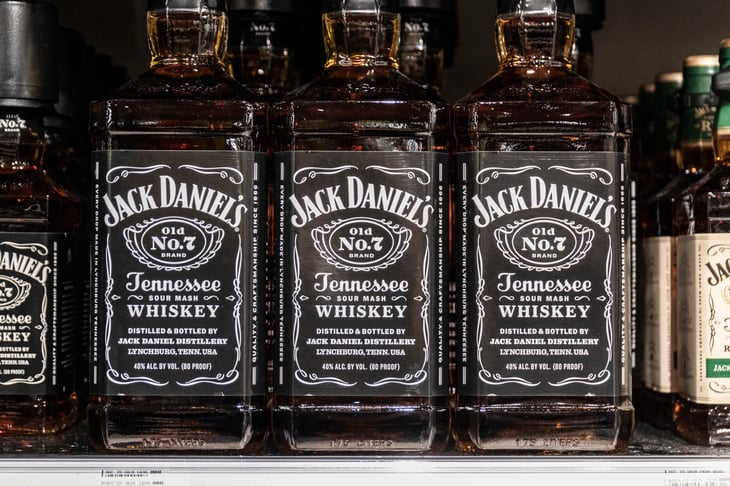
Federal regulations state that the word “bourbon” can only be used to describe a whiskey that is both distilled and aged in the U.S. That means whiskey lovers can be assured that any authentic bourbon they buy wasn’t imported, so it’s largely unaffected by tariffs.
If you want something more specific, there are types of whiskey named for the particular state in which they are made.
For example, under Tennessee state law, to be labeled as “Tennessee whiskey,” a whiskey must be made in Tennessee specifically. Jack Daniel’s and George Dickel are examples of brands of Tennessee whiskey.
Under Kentucky law, a whiskey can only be labeled as “Kentucky bourbon” if it’s made from grains that were cooked, fermented and distilled in Kentucky and it was aged in the state for at least one year.
Almonds
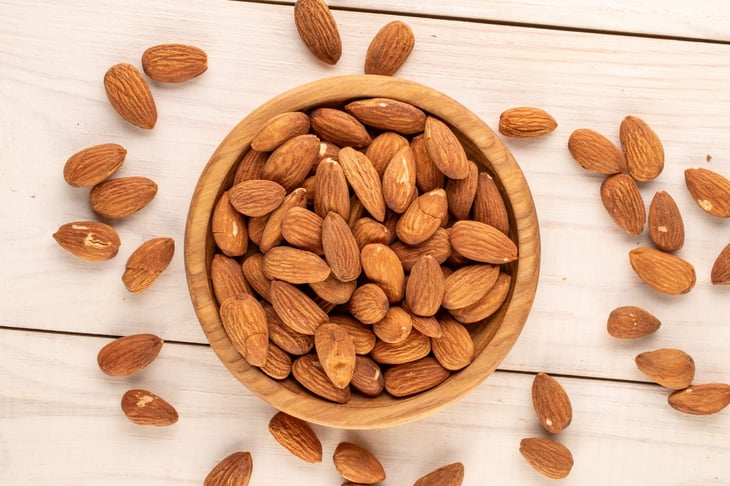
More than three-quarters of the world’s supply of almonds — 77% — is grown in the United States. That means munching on this snack food should help insulate you from tariff-induced price increases.
And like peanuts, almonds contain compounds that can help lower bad cholesterol.

Add a Comment