


Editor's Note: This story originally appeared on LawnStarter.
Pruning and trimming are essential practices in maintaining healthy shrubs and trees, but they serve distinct purposes and are often mistaken for the same thing.
While both involve cutting branches or stems, pruning focuses on improving plant health, structure, and productivity, while trimming is primarily about aesthetics and maintaining a tidy appearance.
Understanding the key differences between these techniques is crucial to optimize plant growth and achieve the desired look.
How Are Pruning and Trimming Different?
Trimming and pruning are often used interchangeably in gardening and tree care.
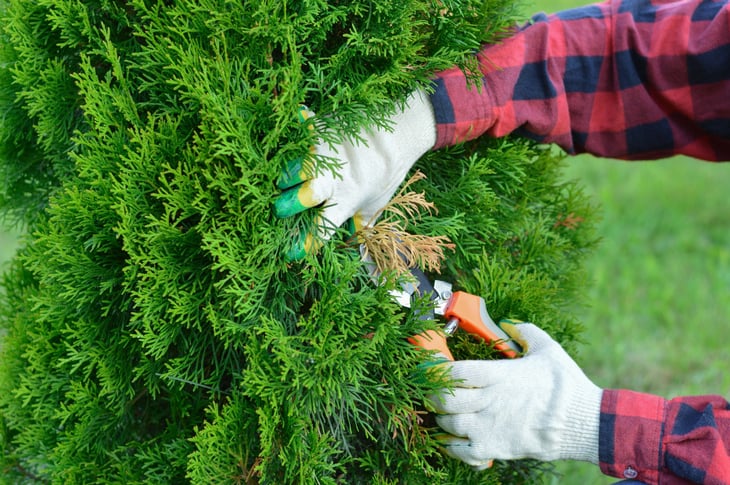
Both techniques involve removing branches or stems from plants, trees, or shrubs, but they are very different methods that serve vastly different purposes.
- Pruning is a deliberate practice that enhances plant health and structure. Pruning promotes strong, healthy growth and protects it from diseases, infections, and insect pests. It can also help fix structural problems or undesirable growth patterns, maximize flowering and fruit production, and rejuvenate older, mature trees.
- Trimming is primarily cosmetic and focuses strongly on maintaining the appearance or size of the plant.
My tip: To think about it another way, pruning is similar to going to the salon or barber for a drastically different hairstyle or look, and trimming is when you go in to freshen up your current style with just a basic trim.
Pruning and trimming are both essential parts of plant care and can be used alone or in combination.

What Is Pruning?

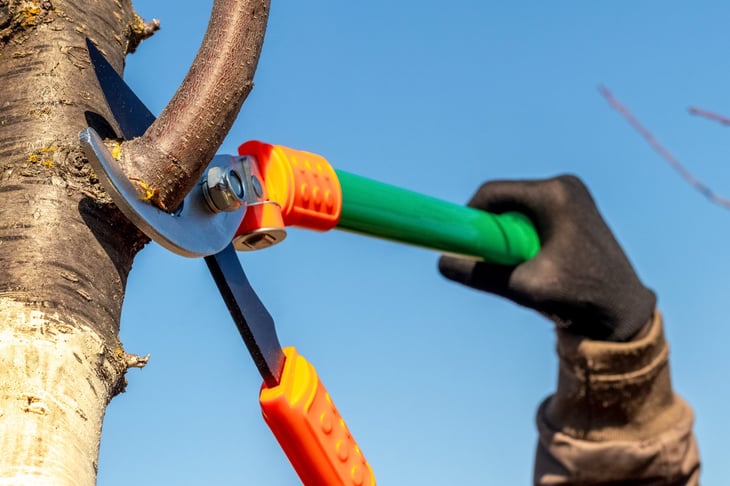
Purpose: Pruning is primarily done to promote long-term health and structural integrity. It involves selectively removing branches to encourage new growth, eliminate damaged or diseased branches, and improve airflow through the center of the plant.
Technique: Pruning typically involves strategic, precise cuts. It may sometimes include removing entire branches, thinning out crowded areas, or shaping the plant to improve its structure.
Timing: Pruning is best when the plant isn’t actively growing. When done in the dormant season, it minimizes plant stress and reduces disease transmission risk. However, specific types of pruning, like deadheading, can be done when the plant is actively growing.

Pruning Frequency

Once established, it is generally recommended that trees and shrubs be pruned once a year.
What time of year you head outside to tackle the project depends on the type of tree you’re working with and its blooming cycle if you’re dealing with flowering trees.
- If your tree or shrub doesn’t flower or produce fruit, you want to prune it during the dormant season, typically in late fall or early spring.
- If your tree or shrub is spring-flowering (like lilacs and primrose) and puts out blooms before June 1, prune it immediately after flowering. In many cases, this is typically mid-summer.
- If your shrub or tree is summer-flowering blooms after June 1, prune it in late winter or early spring. You want to prune before it breaks winter dormancy and new flower buds develop.

What Is Trimming?
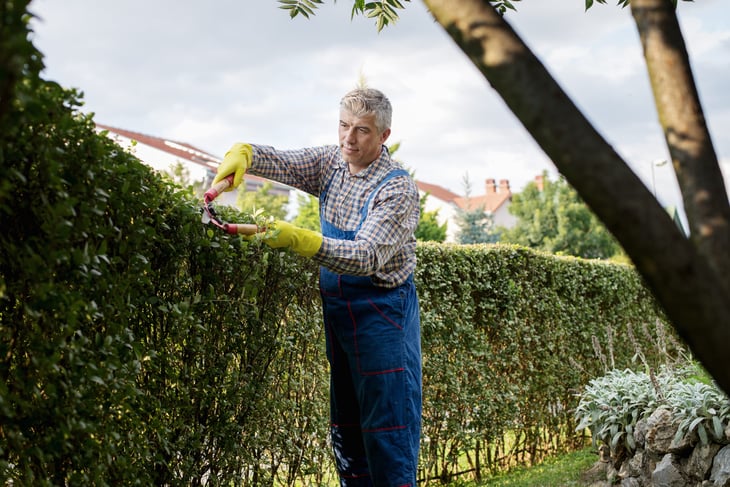
Purpose: Trimming is primarily used to maintain a plant’s shape and appearance. It involves cutting back overgrowth or out-of-control branches to make the tree or shrub look nice and manicured or keep its size in check.
Technique: Trimming typically involves shortening the ends of branches or lightly clipping them with pruning shears or hedge trimmers. It also can include removing dead or damaged foliage to improve the plant’s overall appearance.
Timing: Trimming is usually done during the growing season to encourage bushier growth, but it can be done at any time of the year, depending on the specific plant and its growth habit.

Trimming Frequency
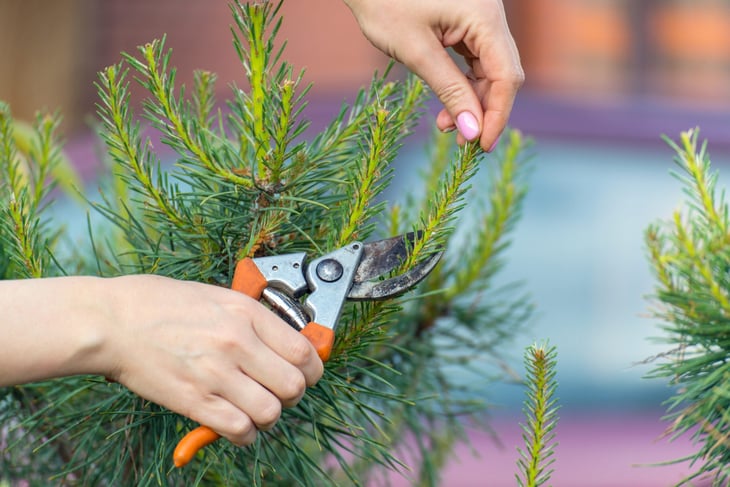
The frequency of trimming varies. Some recommendations say to trim twice a year, some yearly, and others only when needed.
My tip: I fall squarely into the “trim only when needed” camp. I watch my trees and shrubs and give them a touchup when they start getting out of shape or growing too tall for the space.

Should You Hire a Professional Tree Service?

Proper pruning or trimming a tree is both an art and a science, especially if you’re doing significant pruning work to change the tree’s structure or deal with a disease or insect infestation.
If the pruning and trimming aren’t done correctly, you can put the tree or shrub at risk for health problems and unwanted growth.
Incorrectly cut tree branches or limbs can make the tree susceptible to unwanted disease problems, or worse, it can stop flowering or growth entirely if not done correctly.
Also, pruning or trimming is dangerous, especially if you’re on a ladder working high in the canopy.
There’s nothing wrong with turning over pruning services to a professional tree trimming service.
Next are some FAQs about trimming and pruning.

Is Pruning or Trimming Trees Necessary?
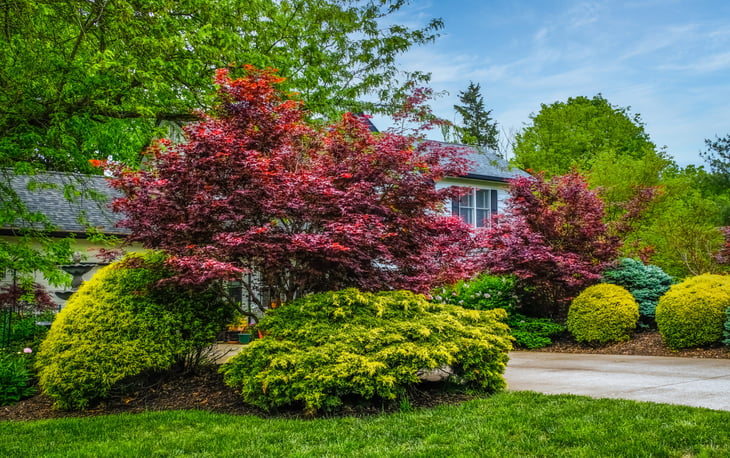
Yes, pruning and trimming are necessary for maintaining healthy, attractive trees and shrubs.
While it’s probably one of the most daunting and complicated parts of keeping your landscaping looking good, it’s essential to keeping everything healthy and attractive.

Can You Prune and Trim Trees at the Same Time?

Sometimes, you may have a tree in your yard that needs some aesthetic work (i.e., trimming) and some branches that need removing as they are growing incorrectly or are infested with disease (i.e., pruning).
While it would save time and effort to prune and trim simultaneously, you should do them separately.
Pruning and trimming simultaneously puts too much stress on the tree. If you need to do both, it’s best to prune first and then, if possible, wait until later in the growing season or even the following year to trim.

Should I Use Pruning Sealer?

No, you should not use pruning sealer on the wound when pruning trees. Instead of being helpful, these products may trap moisture inside the wound, leading to severe problems.
For more information on why it’s not advisable to seal pruning cuts, check out “Why Painting on Tree Pruning Sealer Is a Bad Idea.”


Add a Comment