



Major economic changes can mean major budget balancing for many.
Inflation has been a problem for years at this point. Tariffs add another risk, and one that can be hard to predict.
President Donald Trump has increased tariffs on Chinese imports and applied a 25% tariff to products imported from Canada and Mexico, a 10% universal base tariff and reciprocal tariffs on countries that tax U.S. imports. He’s also paused and reimplemented tariffs along the way, leading to uncertainty.
Despite the unpredictability, economists say tariffs will contribute to rising costs.
“I suspect by May — certainly by June, July — the inflation statistics will look pretty ugly,” Mark Zandi, chief economist at Moody’s, told CNBC.
Americans are doing their best to plan ahead.
Money Talks Newsletter readers stay in the know, so we sent the community a survey asking how they plan to adjust to tariffs. Here’s what they said.
Stock up before prices rise
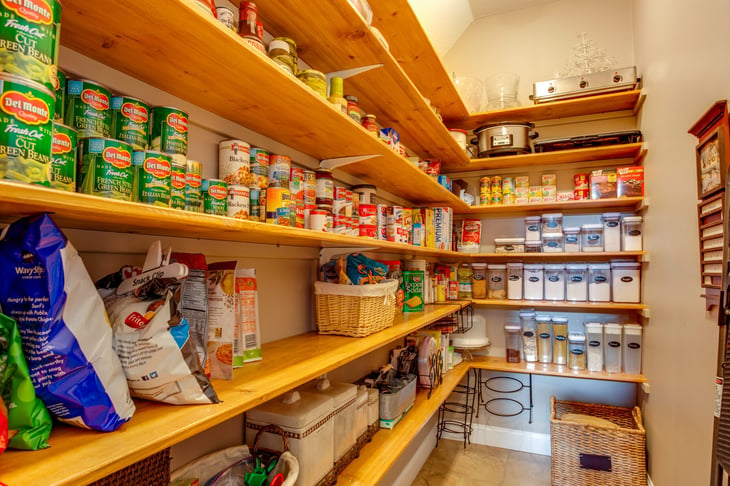
Consumers are trying to get ahead of the curve. Prices don’t necessarily spike immediately after tariffs — certain companies have said they’ll wait before raising costs for shoppers. Still, experts predict higher costs for consumers are on the horizon, and even companies absorbing costs for now haven’t promised to keep that policy forever.
Here’s what some Money Talks News readers are stocking up on:
- Judy P. stocked up on toilet paper and bought a new phone
- Mildred L. bought a new Subaru
- Helena M. is stocking up on coffee and maple syrup, noting, “My Social Security won’t cover all the extra costs.”
Others have been stockpiling for months already. Trump said he’d implement tariffs while on the campaign trail, so his April 2 Liberation Day tariffs aren’t wildly unexpected.
“I’ve been stocking my pantry since the election in November 2024,” Karen B. tells MTN. “I anticipated this would happen, so I’m very prepared. I feel very sorry for the millions of Americans who didn’t want this administration and are not prepared for the once-thriving economy to crash.”
For others, this practice has long been implemented.
“I am a stockpiler. I have about three years’ worth of coffee, paper products, rice, butter, noodles, soup, etc.,” Daniela C. says. “I buy on sale — [to] the limit — and store it properly, so I can shop in my own pantry and buy when things reach my price point.”
Daniela still worries about changes to lumber prices, though, because she’s building a new home.

Buy more American-made products

Survey respondents opting for this solution are largely unfazed about tariffs.
“Not worried about any of [the tariffs] — any short-term pinch will be more than overcome by long-term gains,” Sharie W. tells Money Talks News. “We’re on the brink of something great in America and I’m grateful to be here to see it.”
Roberta M. isn’t worried either. She plans to check labels on products to see what country they’re made in, though she’s already been doing that more lately.
Vickie F. is also paying more attention to county-of-origin labels while looking on the bright side.
“This has heightened my awareness to first look to purchasing products made in the U.S.,” Vickie says. “We aim to ensure that U.S. workers earn a sustainable living. Since the goods we import are not essential for our survival, an increase in tariffs should have minimal impact on us.”

Build their emergency funds

Eying American-made labels is a simple solution for some. Others are focusing on building up their savings to help them try to keep up with rising costs on imports.
Natasha J. is doing “as little shopping as possible” and putting any leftover money into an emergency fund.
“I’m in my 70s with no family. So, I have to take care of myself,” Natasha tells Money Talks News. “My only income is Social Security.”
Other retirees can relate.
I am buying nothing except essentials now and saving every penny I can,” Linda T. says. “I am retired and on a fixed income.”
Kathy M. isn’t even going to spend her required minimum distributions in case she needs the money later. (RMDs are mandatory withdrawals that start in your 70s and apply to most types of retirement accounts.)
Ready to build up your emergency fund, too? Check out “9 Tips for Starting an Emergency Fund Today.”
Grow their own produce

If you’re thoughtful about initial costs and which types of produce to grow, gardening can be a helpful way to save on food costs.
For example, herbs tend to be pricey on a per-ounce basis, so growing those at home can reduce your grocery budget if you use them often.
Home-gardening is a train that several Money Talks News readers are jumping on.
“I will grow my own veggies and eat less from what I purchase,” Mary F. says. “I retired six years ago, my financial situation is scary.”
Te D. worries most about tariffs that affect groceries, as food is a basic need.
“[I] will grow some veggies in my yard to supplement groceries,” Te D. says.
Linda S. was already a gardener but is leaning into the practice because of tariffs.
“I increased my vegetable garden, which will provide all my veggies, with extra to sell or trade,” Linda says.
Lennis G. is doing the same and buying produce locally.
“I’m going to be expanding my gardening. Plus, there are local gardens for fresh produce. As our season comes to an end, I’ll be drying and preserving more,” Lennis says. “I’m not looking forward to the increases from Mexico and Canada. I buy a lot of produce that comes from Mexico.”
In 2023, Mexico supplied 63% of U.S. vegetable imports and 47% of U.S. fruit and nut imports, according to the U.S. Department of Agriculture.

Postpone large purchases

Costly purchases feel even more so when budgets are being stretched thin.
Money Talks News readers are delaying various large purchases. For example:
- Delia L. isn’t purchasing home furnishings.
- Pamela F. isn’t purchasing a car or washing machine.
- Sharon S. isn’t purchasing a new car, iPhone, iPad, laptop or even a downsized home.
- Tina L. has called off her search for a home and a car.
- Kathy M. has canceled plans to buy a new car and sectional.
- Carolyn T., Garry A., Joan M., Kathy W., and Steve W. also have changed their minds about buying a car.
Moira T. was going to buy a new car and visit family in Europe, and was in the midst of upgrading her kitchen and bath — but is putting all those plans on hold.
“I’m scared. My job is not secure. I’m my industry, people are pulling back, because of economic uncertainty. I just bought a house last June and if I lose my job, I lose my home,” Moira tells MTN.

Better maintain their vehicles

Trump’s 25% tariffs on the auto industry could reduce car sales by 2 million in the U.S. and Canada, CNBC reports.
“This may well be the most consequential year for the auto industry in history – not just because of immediate cost pressures, but because it’s forcing fundamental change in how and where the industry builds,” Felix Stellmaszek, Boston Consulting Group’s global lead of automotive and mobility, told CNBC.
One way to avoid having to buy a new car is maintaining the one already parked outside.
Vehicle-related tariffs were a top worry for some survey respondents, so they’re doing what they can to avoid additional auto purchases.
“[I’m] trying to keep my 2016 car in good shape since it will be impossible to afford to replace it if it dies!” Virginia G. tells Money Talks News.
Linda S. and Rosalind H. are also worried about how their older cars will fare and the costs for repairs, if any are needed.

Curtail their spending

Consulting company Deloitte reports that consumers are likely going to cut back their spending because of tariff-related inflation, with the biggest drop in spending happening in 2026. The effect on wider economic growth could be “severe,” Deloitte economists said.
Money Talks News readers confirm this with their own experiences.
“If prices increase more than I’m willing to pay, I will use up what have and make do or do without. Period!” David H. says. “I understand why Trump is doing this. But we all know there is [a] much better, more reasonable and effective way. Yes, it would take longer, but the punch-them-in-the-face tactics are not the way.”
David is not the only one who’s unhappy about having to cut back due to tariffs.
“[I’m] cutting back on spending. If I buy something, think about [it] twice,” Leigh W. says. “It’s not fair that the middle- and low-income folks have to pay for this.”
At least one reader is even cutting back out of spite.
“I intend to buy very little in the hope that less spending will throw the economy into a bad recession that will be on Chump’s record forever!” Fred J. says.
Unfortunately, even basic needs are on the chopping block. Beverly D., Sherry G. and Kathleen R. are among the survey respondents forced to cut back on groceries.
“I am on Social Security and have a very limited income. I already cannot afford fresh fruits and vegetables,” Kathleen says. “I will be cutting food spending even more as prices rise, and I will be going to food pantries out of necessity.”

Find other ways to save money

Everyone has their own day-to-day hacks:
- Cornelia H., Deb. K., Donna J., Eleanor H., Joe G., Kendall K., Robert D. and Sharon P. are among the Money Talks News readers comparing prices more or looking for cheaper substitute products — or both.
- Beverly D., Carol C., Fernando T., Joe. G. and Lisa I. are among those eating out less.
- Lisa I. and SeSe P. are shopping at dollar stores more.
Patricia S. is also turning off the heat more often and asking her adult son to contribute more at home — which is an increasingly common ask, as we reported in “Half of Parents Still Support Their Grown Kids Financially. Here’s Where the Money Goes.”
“I have to be brave and prayerful when I check my account and when I read the news,” Patricia tells MTN. “I need to watch myself and not give in to worry, anger or fear — these are unhelpful.”

Do nothing

Many people have no plans to change their finances or other habits due to tariffs. In fact, doing nothing was the most common response to our question about what changes readers plan to make in response to tariffs.
“I don’t know exactly how any of the tariffs are going to affect me personally but plan to just cross that bridge when I come to it,” Susan T. says. “I feel like my financial situation is my own responsibility. If I can’t afford something, I can choose to live without it, or work a little harder to get it.”
Others aren’t planning changes in response to tariffs because they support them or believe in Trump.
“I do not buy the hype from the MSM,” Denny P. says. “I will happily pay more for American-made goods.”
“Tariffs don’t worry me. This country once ran on tariffs, not taxpayers,” Sherry W. says.
Scott S. isn’t as optimistic. However, he doesn’t have plans for dealing with the financial strain tariffs could cause.
“I’m retired and on fixed income, so inflation will hurt,” Scott says.
MTN previously asked readers to share how they’re dealing with inflation. To learn what they said, check out “11 Things People Have Stopped Buying — and How They Are Getting By.”

Add a Comment