



Editor's Note: This story originally appeared on Boldin.
Success in games — whether it’s chess, poker, or even video games — relies on strategy, patience, and calculated risks. The best players don’t just react; they anticipate, adapt, and think several moves ahead.
The same principles apply to managing money.
By applying lessons from favorite games, you can build wealth, protect your assets, and ensure long-term financial security. Whether it’s thinking ahead like a grandmaster, managing risk like a high-stakes player, or optimizing resources like a top-tier strategist, the mindset that wins games can also help you win at money.
Here are financial lessons from popular games.
1. Wordle: Iterative Learning and Course Correction

Wordle took over people’s phones in 2021 and became a daily obsession for many. The word game requires guessing a word using logical deduction and feedback loops — each guess refines the strategy for the next attempt.
How Wordle Applies to Financial Planning

Smart investors adjust their plans based on new information. Just like refining Wordle guesses. Financial planning requires analyzing past choices, adjusting for mistakes, and making better future moves — whether it’s tweaking an investment portfolio, budgeting smarter, or adapting to economic shifts.
The iterative nature of financial planning is why it is so important to maintain a written plan that can adjust with you and the economic situation over time.

2. Monopoly: Cash Flow and Asset Liquidity Matter
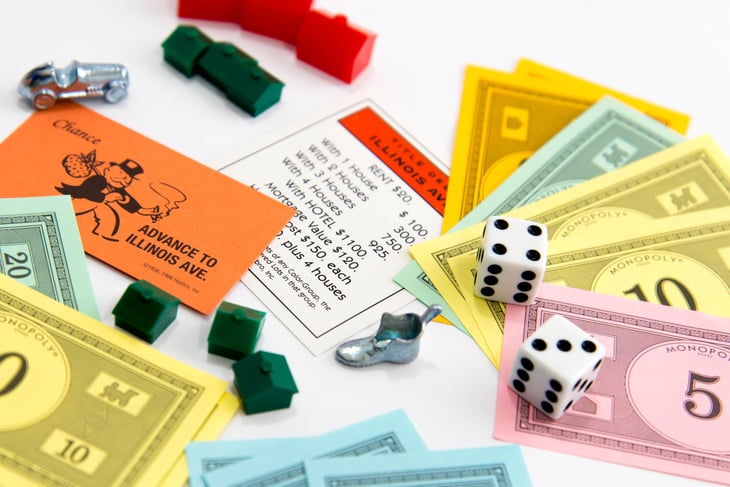
I am not sure I have ever completed a game of Monopoly, but I have definitely enjoyed playing at different times over my life — as a kid, with my kids, etc. In Monopoly, the key to winning is strategic property acquisition, smart trading, and efficient cash flow management.
One of the biggest strategic decisions happens early in the game: deciding which color properties to prioritize for acquisition!
Part of it is based on luck (where you land), but analysis of the game suggests that the orange properties (St. James Place, Tennessee Avenue, and New York Avenue) are the best bet because players land there the most due to their position after “Jail,” where players frequently emerge.
Perhaps more importantly, from a strategy perspective, they offer a great balance between affordability and high rent.
How Playing a Smart Strategy in Monopoly Relates to Real Life

Monopoly is truly a great game for teaching financial planning basics. You learn to:
- Always have cash on hand. Liquidity ensures resilience — having accessible savings and emergency funds prevents financial ruin.
- Prioritize income — generating investments (e.g., rental properties, dividend stocks) over illiquid assets to maintain financial flexibility.
- Play the long game with patience.
- Don’t put all your eggs in one basket. The Monopoly winner is usually someone who spreads out properties throughout the board and has multiple chances at capturing rents.
- Focus on cash flow.
- Seek value. The most expensive assets are not always the best bet. (Many people lose at Monopoly by owning the most expensive pieces because they don’t pay attention to cost, only cash flow.)
Use the Boldin Planner to understand your financial future if you were to invest in income producing real estate.

3. Chess: Long-Term Planning and Portfolio Diversification

Revered across cultures for centuries, chess symbolizes intellect, strategy, and competition, influencing everything from military tactics to artificial intelligence development while remaining a universal test of mental skill and patience.
Chess is all about thinking multiple moves ahead, controlling key positions, and balancing offense with defense.
What Chess Teaches You About Financial Planning

The key to successful financial planning is the same as winning at chess. You need to plan your end game from the very beginning. Each move you make in the present has major implications down the road.

4. Go: Compounding Growth and Patience

Go is an ancient strategy board game that originated in China over 2,500 years ago. The goal of the game is to control more territory on the board than your opponent by strategically placing stones and capturing enemy pieces. The game is not as well known as chess, but it has also had a major influence on philosophy, warfare, and artificial intelligence.
The game requires patience, balance, and provides insights into the complexity of human decision-making. In Go, controlling territory gradually is key — small, steady gains create long-term dominance. Impulsive moves can backfire.
Wealth-Building Lessons From the Game of Go

The key strategy for both Go and wealth-building is slow and steady and progress. Saving regularly and investing every month is better than trying to time the market to get ahead quickly.
It is better to steadily accumulate assets (stocks, real estate, retirement funds). And, over time, compounding growth creates significant financial stability.

5. Candy Crush Saga: Reduce Impulsive Decisions

Candy Crush Saga is another popular game that is played on a phone. It’s a match-three puzzle game where players swap adjacent candies to form rows or columns of at least three matching pieces, which then disappear to earn points and trigger chain reactions.
Each level has specific objectives, such as reaching a target score, clearing jelly-covered tiles, or collecting special items within a limited number of moves.
In Candy Crush Saga, success comes from planning moves carefully, prioritizing special candy combinations, and staying focused on the level’s objective rather than making random matches. Since moves are limited, players must manage their resources wisely, using boosters strategically and setting up chain reactions for maximum impact.
Wealth-Building Lessons From Candy Crush Saga

These same principles apply to wealth-building — long-term financial success requires planning ahead, making high-impact investment choices, and staying disciplined in spending.
Just as wasting moves in Candy Crush can lead to failure, impulsive financial decisions can drain resources, while strategic investing, budgeting, and saving ensure steady progress toward financial security.
Impulsive decisions in financial planning can lead to costly mistakes that undermine long-term goals. Acting on impulse, whether it’s making a hasty investment, taking on debt, or responding to short-term market fluctuations, often ignores careful analysis and can result in missed opportunities or unnecessary risks.
Financial planning is about making informed, thoughtful choices that align with your values and future objectives.

6. Poker: Emotional Control

Winning at poker requires a mix of skill, strategy, and emotional control. Successful players don’t just rely on luck — they carefully assess risk, read their opponents, and make calculated decisions based on probabilities. Key strategies include patience and selective aggression, meaning skilled players wait for strong hands but know when to apply pressure.
Additionally, bankroll management is crucial; players must avoid betting too much on a single hand, ensuring they have enough resources to stay in the game. Bluffing and psychological play are also vital — knowing when to project strength or weakness can manipulate opponents into making costly mistakes.
Wealth-Building Lessons From Poker

These same principles are essential for financial planning. Just as a poker player avoids going “all in” recklessly, a smart investor diversifies their portfolio instead of risking everything on one opportunity.
Understanding risk and reward, like knowing when to bet or fold, helps individuals make informed investment choices. Managing money wisely ensures long-term financial security, while emotional control — avoiding panic-selling or impulsive spending — keeps a financial plan on track.
In both poker and wealth-building, the key to success isn’t luck — it’s strategy, patience, and disciplined decision-making.

7. Spelling Bee: Maximizing Limited Resources

I know loads of people who don’t want to leave the house in the morning until they have been crowned Queen Bee (or at least achieved genius level) in this game.
To accomplish this, you use a fixed set of letters to make as many words as possible, requiring creativity and efficiency.
Financial Strategies From Spelling Bee

Managing finances is about maximizing what you have — stretching income through smart budgeting, tax efficiency, and compounding investments.
Just as top Spelling Bee players spot hidden high-scoring words, top financial planners find underutilized assets and optimize them for maximum gain (like using tax-advantaged accounts, minimizing fees, or investing in high-yield opportunities).

8. Risk: Strategic Expansion and Risk Management

Risk is a strategic board game where players compete to conquer territories across a world map by deploying armies, attacking opponents, and forming alliances. The goal is to eliminate rivals and achieve global domination through tactical planning, dice-based battles, and strategic reinforcements.
Game strategists recommend that you don’t overextend and build stronghold regions before expanding.
Wealth-Building Lessons From Risk

Grow steadily rather than chasing risky, unsustainable investments. A diversified portfolio helps protect against financial setbacks.
It is also important to understand that overcommitting resources (e.g., taking on too much debt) makes you vulnerable. And, you need to balance your offense (investment) with defense (protection).

9. Ticket to Ride: Goal-Oriented Financial Planning

Ticket to Ride was first launched in 2004 and quickly became one of the most popular modern board games, praised for its easy-to-learn rules and strategic depth.
Players must plan efficient train routes while blocking opponents and adapting to changing opportunities.

Wealth-Building Lessons From Ticket to Ride

Just as in Ticket to Ride, successful financial planning involves setting clear goals (buying a home, retirement, college savings) and making efficient, strategic moves to reach them, while being flexible enough to adjust to market changes.


Add a Comment