


Editor's Note: This story originally appeared on Boldin.
You might not think of it this way, but most of us get scammed — somewhat tricked — out of our hard-earned money every single day.
Little expenses can add up to big bucks that we could be saving for retirement, spending on something you really need or want now, and being able to afford the life you want in retirement.
Whether it’s spending money on (frankly) dumb stuff, being unaware of hidden expenses, or actually getting scammed by financial services that prey on uneducated consumers, watch out for these ways you might be wasting money that could be saved for retirement.
1. Private school education

We get it — there are times when public school is not the best fit for your child. However, take the costs seriously, particularly for elementary, middle school, and high school.
Research suggests that the better test scores and college entrances that are often attributed to private schools are better explained by the family’s education and income, not the school itself.
Robert Pianta, dean of the School of Education and Human Development at the University of Virginia, has studied the academic, social, psychological, and attainment outcomes of students attending private and public schools. He told U.S. News & World Report:
“When you compare children who went to private school (for an average of six years) with those who only went to public school, any apparent benefits of private schooling — higher test scores, for example — are entirely attributable to parents’ education and income. The fact that they went to private school does not account for any differences we might see.”
Still not sure public education is the best option for your family? Some families opt for private school for certain periods of their child’s life. For example, some families who favor public school opt for private school for the middle school years, an awkward and formative time when a more controlled environment is deemed advantageous.
And you may want to weigh the costs of living in a community with great public schools versus the costs of a less expensive ZIP code with access to private education.
Private college can be another huge expense. However, some schools grant significant discounts off their published tuition, making them competitive with public higher education. Public college can also be expensive, and bridging to a four-year school via a community college (schools that often offer small class sizes and very engaged teachers) can be a great option.
Estimated savings: $6,000-$30,000 per year or more
2. That new car smell

There are some things you just don’t want to buy used — mattresses, child car seats, food, and bike helmets being just a few. The one thing you never want to buy new? A car.
A shiny new set of wheels might sound awfully tempting, but a new car loses 8% to 11% of its value the second you drive it off the lot and perhaps 10% more every year or 15% to 25% for the first five years.
What’s worse, with the new wheels come new expenses. A newer car will likely mean higher insurance premiums and higher registration fees.
Buying used, on the other hand, is an opportunity to get more for less. Further, you may be surprised to learn that transportation is actually one of the biggest things you’ll spend money on in retirement. So figuring out how to minimize costs is useful.
Estimated savings: Buying used could save $20,000 more for retirement. (Your actual savings would vary widely. However, the average cost of a new car is $50,000, and a used car costs $30,000 on average. The difference is $20,000.)
3. ‘Luxury’ goods and services

You are entitled to spend your money however you like. If you want the Maserati, go for it. If you have wanted the Birkin bag since you were in your 20s and still want it now, okay. Dinner out? Why not.
Just remember that luxuries may not be the wisest way to spend your money. But we all do it to some extent. Research from Deutsche Bank found that spending on luxury goods is done by the richest as well as the poorest:
- The wealthiest (the top fifth of earners) spend around 65% of expenditures on luxury goods.
- Middle-income earners spend 50% on luxuries.
- And the lowest-income families spend 40%.
Now, it is important to point out that what is considered a luxury by the wealthy may be vastly different from what is considered a luxury by someone with fewer resources. It is important to note that the researchers counted dinner at McDonald’s as a luxury in some cases.
The author of the study clarified that they defined luxuries as “goods or services consumed in greater proportions as a person’s income increases.”
So, of course, you are going to spend more if your income increases. And, if you were to just stick to the bare necessities, life would be pretty dismal. But, consider splurges carefully (and maybe focus your spending on what will really make you happy).
Estimated savings: Limiting luxury spending could save you at least $500 to $10,000-plus a year.

4. Low insurance deductibles

A low deductible may sound appealing when you think about a costly claim down the line, but you’ll pay much more in higher premiums.
According to the Insurance Information Institute, raising your deductible from $200 to $500 can reduce the cost of your comprehensive and collision coverage by 15% to 30%.
Worried you won’t be able to come up with the higher deductible in the event of an accident? Put the amount you’re saving in premiums every month into an interest-bearing account and save it for a rainy day.
Chances are that the balance in the account will be greater than your deductible long before you’re in an accident.
Estimated savings: Talk to your insurance agent and maybe save $1,000 a year.

5. Maintaining a big house

If you have a big home and don’t really need the space, you are definitely wasting money.
Downsizing can cut mortgage payments as well as reduce upkeep costs and potentially your overall cost of living — especially if you relocate.
Estimated savings: Downsizing can probably save you $10,000 or more in expenses — in addition to releasing home equity.
6. Smoking, overpriced coffee, and bottled water

You might not think of these consumables as scams — but they sure are dumb ways to spend money.
Smoking especially. Smoking costs a lot more than the price of a pack of cigarettes.
The average cost of a pack of cigarettes in the U.S. is $8, but the health-related costs per pack are about $35, according to the American Cancer Society. Over the course of a year, that adds up to over $15,000 for a pack-a-day habit.
Think you’re in the clear if you smoke electronic cigarettes? Think again. The aerosols these products produce contain a variety of chemicals, some known to be toxic or cause cancer.
A bottle of water might cost you $1 to $3, and coffee could be $5 or more for each cup. If you have any of these vices, cut them out and save more for retirement.
Estimated savings: Curtailing cigarettes, coffee, or bottled water is at least $5 per day in savings, which adds up to $1,825 a year or more.
7. Dessert or an extra glass of wine

Let’s say that a weekly dinner out is important to you and completely within your budget. Now, let’s say that you keep these dates, but limit your ordering to your entree and just one glass of wine.
You’ll be able to save an extra $10 to $20 every week or $40 if you are a couple. Multiply that by 52 weeks, and you’ve got big savings.
Estimated savings: $1,000 per year if you are single, or $2,000 for a couple.

8. Playing the lottery

It can be fun to play the lottery. And you can play — just spend $10 instead of hundreds. Stick those hundreds into retirement savings and win the retirement lottery!
We’ve all heard the saying, “You’re more likely to be struck by lightning than you are to win the lottery,” yet Americans in the 45 states where lotteries are legal spent $71 billion on lotto games in 2017. That’s a lot — about $300 per adult in those states.
Financial guru Dave Ramsey calls lotteries “a tax on the poor and people who can’t do math.”
If that sounds harsh, the reality is harsher. A Duke University study from the 1980s found that the poorest third of households buy half of all lotto tickets, in part because lotteries are marketed most aggressively in poor neighborhoods.
Estimated savings: Minimize lottery spending and save $300 or more per year for retirement.

9. Carrying a balance on credit cards

Debt is a shackle that holds you back. Not only does it cost you interest, but it can cost you down the line in the form of a lower credit score, causing you to pay higher interest rates on mortgages and car loans.
Your credit score is based, in part, on your utilization rate — how much of your available credit you’re using. Try to keep your total ratio and the ratio for each individual card below 30% at all times.
According to Federal Reserve data, the average credit card APR is 21.47%. And the average American has $6,380 in credit card debt. Quick multiplication tells us that the average consumer is paying $1,369 annually just for the privilege of owing money to their creditors.
Estimated savings: Get rid of debt and save an average of $1,369 a year.
10. Being too embarrassed to ask for discounts

In some countries, haggling is considered an art form and expected as a part of any transaction. Not so much in the U.S., where the idea of negotiation intimidates most people. We’ve been trained to pay the sticker price without question.
Chances are, you could be paying less for almost any product or service. All you have to do is ask. A polite and easy way to ask: “Is this the best price you can offer me?”
You may also be able to get a discount for paying with cash, since typical merchant companies charge a percentage of everything the retailer earns through credit card transactions.
You may not always succeed at getting a lower price, but saving even 5% or 10% here and there can really add up to big savings over time.
The worst thing that can happen? They say no.
Estimated savings: $1,000 per year (or much more)

11. Investment fees

Some people will drive out of their way to avoid a $3 ATM fee, but they’re losing much more than a few dollars via investment fees. The SEC released an Investor Bulletin to educate consumers about how fees can impact the value of a portfolio.
Take a $500,000 investment in a portfolio with a 6% annual return and an annual fee of 1% (which is actually less than average). The investment fee will be $5,000 of your $30,000 returns.
Over a 20-year period, that 1% fee will cost you $100,000, not including the reinvestment of those savings.
Estimated savings: $5,000 per year

12. Hidden fees on monthly bills

Some research suggests that hidden charges on monthly bills could be costing you as much as $1,000 per year. This happens in two ways:
- Cost creep: An incremental increase in your bill each month by only a few dollars each month for previously free services.
- Zombie charges: Fees deducted from your account after you’ve already canceled your service while the company “processes your request.” When canceling a service, be clear that you want the charges to end immediately and take note of the date. If you’re still getting billed after that cycle, it’s time to make another call.
Estimated savings: $1,000 per year

13. Late fees and overdraft charges

Recurring bills — mortgage payments, utilities, phone services, etc. — are a fact of life. What you want to avoid are late fees and overdraft fees.
It might happen on occasion, but these often overlooked costs add up to an additional $74 billion per year, according doxo’s analysis published on CNBC.
They found that the average household spends $150 a year on these extra fees. It might be a good idea to automate payments in order to ensure you are on time — assuming you have the money in the bank.
Estimated savings: Paying bills on time could save you $150 per year
14. Low credit scores

Boosting your credit score is a good idea — especially if you are or will be carrying debt. A low credit score is viewed by creditors as a risk, and you will therefore pay higher interest rates — which will really add up.
The doxo study found that improving your credit score by just 35 points can save you $301 in interest expenses.
Estimated savings: $301 per year
15. Payday loans
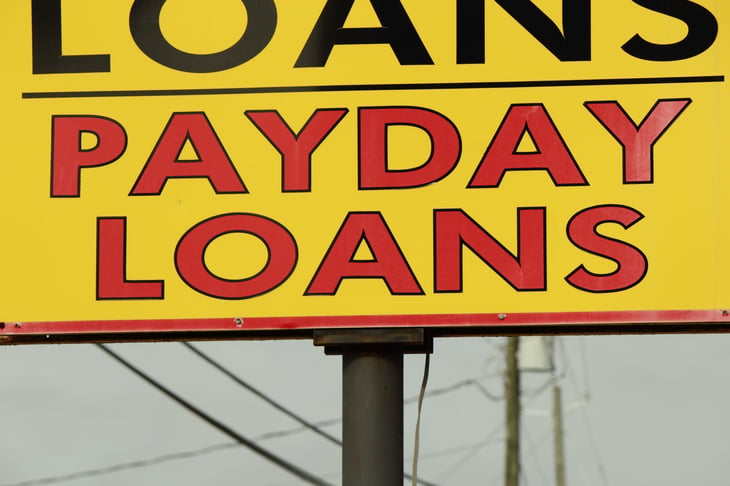
It seems like payday loan offers are everywhere these days. When faced with an immediate cash shortage, it could be tempting to take advantage, but this form of short-term borrowing can be very costly.
According to Pew Trusts, 12 million American adults use payday loans annually. On average, a borrower takes out eight loans of $375 each per year and spends $520 on interest.
Although payday loans are presented as an alternative to costly bank overdraft fees, the reality is that most borrowers end up overdrafting anyway, often due to the payday lender making a withdrawal from their account, and most borrowers end up paying fees for both.
If you’re worried about overdrafts and have sufficient credit, you’re better off seeking an overdraft line of credit from your bank. While the average 13% interest rate is higher than many short-term loan rates, it’s a bargain compared to the over 300% APR charged by payday loans.
Estimated savings: $520 per year

16. Actual fraud

Financial fraud is a major problem for everyone. However, it is especially concerning for people 50 and over. According to the AARP, older Americans lose $3 billion each year due to financial fraud, and the average victim loses $120,000.
What’s more concerning is that 1 out of 5 older Americans is a victim of financial exploitation, and seniors don’t usually have the resources to recover from major fraud.
Learn how to protect yourself from fraud and one reason why seniors are more vulnerable.
Estimated savings: Protect yourself from fraud and potentially keep $120,000

It Really Adds up — to $200,000 a Year

The list could go on and on about how we make bad decisions about money.
- If all of the above were applicable to you, you could save a whopping estimated $200,000 a year (give or take – depending on the year)!
- If you weren’t a victim of fraud, you would “only” save $80,000.
- And, if you didn’t downsize or buy a new car, your everyday expenses might “only” save you $50,000. That is a lot!
If you’re worried about retirement savings and making any of these wasteful mistakes, reevaluate your spending.
Find ways to stop the holes in your budget and start saving more of your extra cash. The sooner you start, the more likely you are to have a comfortable retirement.
Most importantly, put together a really good retirement plan. Numerous studies have shown that creating a plan helps you set goals. Setting goals makes you more likely to save, and you will feel more confident and happy about your future. The Boldin Retirement Planner is a great place to start.


Add a Comment